School Test Questions No. 1

School Test Questions I

Spending over 30 years teaching, I’ve collected several questions used in tests and quizzes for my students. Sure, I’ve used test bank multiple choice and True/False questions to test vocabulary and concept recall, but there are many open-ended and essay questions that I have crafted over the years. These allow the students to synthesize what they’ve learned into new understanding.

I’d like to share some of them with you, my audience. These questions are thought questions, asking the student to apply what they’ve learned to new ways of thinking and to synthesize new knowledge. Yup, a number of these questions did result in student complaints about “You didn’t teach us this!” or “You never said anything about [insert the topic students complain about here]!” All the questions were designed so as not to require a regurgitation of what was previously memorized. The questions were designed so that the student needed to take what was previously learned, make connections among these concepts, and provide a reasonable extrapolation for an answer. That’s how science works, scientists working out in the field or in a lab don’t easily find the answer embedded in a fossil or bubbling in a test tube. They take the data collected and attempt to bring a new understanding between what is already known and what they have discovered.

So here’s your chance to do the same! Don’t worry, after each question, I will provide a reasonable answer for you to check with yours. If you’ve thought of something I haven’t, let me know. We can both be learners! There are two objectives to this exercise: (1) You will learn something about the world and the way scientists work, and (2) You will have some fun!

_________________________________

Today’s question:

Mongooses, animals similar to weasels and ferrets, are diurnal predatory animals. They were brought to Hawai’i by several sugar-cane growers. The sugar-cane growers hoped that the mongoose would kill the rats that were eating their sugar cane at night. Explain why this plan did not work.
One of the test questions I used for students to answer.

There are several answers acceptable for this question.

The students had been studying the behaviors of animals that are active at different times of the day. Diurnal means active during the day, while nocturnal means active at night. Another term, crepuscular, describes the behavior of animals active during early morning and evening. A direct answer to the problem would require a comparison of the two “time partitioning” behaviors. An acceptable answer would incorporate the concept of “Being diurnal, the mongoose would not be active at night when the rats are feeding upon the sugar cane. The two animals would never, really, encounter each other, so the rat population would be able to feed upon the cane with little to fear from the mongoose.”

There is an alternative answer that would require the students to go beyond the application of behavioral time cycles. Because mongoose had to be imported into the island, you can infer that the animals are not native to Hawai’i. The introduction of non-native species can drastically disrupt the food web interactions of native plants and animals. Mongoose feed on ground-nesting birds, reptiles, and small mammals, as well as sea turtle eggs and young hatchlings. With no native predator for mongoose and with such a variety of available food for the mongoose, they can do considerable damage to the local wildlife. The failure and damage done by the introduction would be an acceptable explanation from the student.

The problem of introduced species is so severe that Hawai’i has set up a state government agency to regulate any introduction of non-native organisms. In the case of mongoose, the Hawai’i Invasive Species Council states: “Hawai’i Injurious Wildlife (HAR 124). It is against Hawai’i State law for any person to introduce, keep or breed any mongoose within the State except by permit from HDOA; permits are not issued for Kaua’i County or the island of Lana’i. Fines for violations are between $250 and $1,000 for each mongoose introduced, kept or bred. HDOA Animal Industry Division Quarantine Rules HAR 142-92.”

For more information about the introduction of mongooses into Hawaii, check out this website: https://dlnr.hawaii.gov/hisc/info/invasive-species-profiles/mongoose/
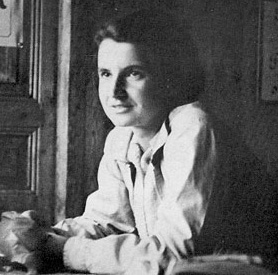
Rosalind Franklin

Figure 1: Rosalind Franklin (1)

The young woman pictured above should be as well known as James Watson and Francis Crick, the discoverers of the structure of the DNA molecule. Watson and Crick, along with Maurice Wilkins received the 1962 Nobel Prize in Physiology or Medicine for their work in discovering the shape of that molecule.

Rosalind Franklin (Figure 1) was an X-ray crystallographer. Her research required exhaustive purification of certain chemical compounds and then subjecting them to X-rays. The resulting X-rays would then be recorded on a photographic plate. What would be seen, however, would be a pattern of light and dark areas on the photographic plate (see Figure 2) that indicated the shape of the molecule through which the rays passed, called a ‘diffraction pattern’. Through careful measurements of the patterns on the plate, the shape of the molecule could be determined.

Franklin received her PhD in 1945. From 1947 until 1950, she worked under Jacques Méring at the State Chemical Laboratory in Paris where she learned the techniques of X-ray diffraction photography. While in France, her work quickly made her an expert in X-ray crystallography. She moved back to London in 1951 where she continued her work in diffraction photography at the Biophysical Laboratory at King’s College. Her task at King’s College was to upgrade the X-ray crystallography lab there to work on DNA in the lab of Maurice Wilkins.

The work involved in producing the diffraction patterns was tedious and meticulous. This type of effort was just what the young woman’s mind excelled at. Her work, in early 1951 was getting samples of DNA pure enough so that the X-ray diffraction pattern could be analyzed and the structure of DNA could be discerned.

2024-02-18 14_00_01-The double helix and the 'wronged heroine' _ Nature — Mozilla Firefox

Figure 2: X-ray diffraction pattern of DNA. Photo 51 (2)

Her work slowly approached producing an image that would clearly demonstrate the helical (spiral) structure of the DNA molecule. Many people hypothesized that the DNA molecule might have a helical shape, but the manner of the molecule’s interlocking structural units eluded hard physical evidence. She still needed to measure and compute from the images she made, the data that would prove a helical shape. One of the best photos of the DNA molecule she produced was “Photo 51” (see above). She could see that the structure was helical, but she still held back and would not “go on the record” saying that DNA had a helical structure without further evidence.

Meanwhile, Watson and Crick, working at the Cavendish Lab of Cambridge University, were also trying to figure out DNA’s structure. Where Franklin was detail-oriented, Watson was more a theorist, who plunged headlong into problem-solving, theorizing many possible scenarios where interlocking sub-components of the molecule would fit together. He was familiar with being able to read diffraction patterns, but never produced any himself. One day, while visiting King’s College, he gained a look at Franklin’s work, without her permission, and this was enough for the theorist to recognize the path needed to build a model of DNA.

On 28 February 1953, Watson and Crick announced to the world that they had produced a 3-dimensional structure of the DNA molecule. The model was elegant in the manner of the molecular units of nucleic acids, of which there were four, and how they combined with a sugar-phosphate backbone.

Watson and Crick

Figure 3: Watson (left) and Crick demonstrate the DNA structure model (3)

In 1962, the Karolinska Institutet in Sweden awarded the Nobel Prize in Physiology or Medicine to Francis Crick, James Watson, and Maurice Wilkins.

For her work in providing the hard evidence for DNA’s structure, Franklin was not included in the award. There were several reasons given, one was that the Nobel rules specify that there is a maximum of three individuals who can be nominated for any of the awards.

Another reason was that the Nobel rules do not allow the prize to be given posthumously. Franklin died on 16 April 1958 from cancer. She was 37 years old.

In a field that is dominated by males, science needs to include the stories not only of men but also of the women who have moved human knowledge forward. Franklin is one of many.

(1) Science History Institute, https://sciencehistory.org/education/scientific-biographies/james-watson-francis-crick-maurice-wilkins-and-rosalind-franklin/

18 Feb 2024

(2) The Double Helix and the Wronged Heroine, https://www.nature.com/articles/nature01399#Fig1.

18 Feb 2024

(3) Science History Institute, https://sciencehistory.org/education/scientific-biographies/james-watson-francis-crick-maurice-wilkins-and-rosalind-franklin/

18 Feb 2024

Oklahoma’s Fort Reno’s Role in History

Oklahoma’s Fort Reno Remount Station

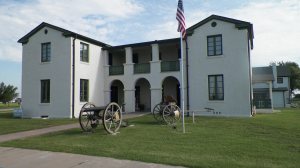
Original Fort Reno main building and now the visitor’s center.

On our 2019 cross-country trip, following as much of the old Route 66 as we could find, we found the old Fort Reno Remount Station, not far from the old Route 66 and Interstate 40. Not knowing what to expect, we turned right onto the access road leading to the fort. That turn brought together several significant events in US history!

Established in 1874 as a military camp “to pacify and protect” the Cheyennes and Arapahos living in the area, the facility’s commanding officer designated the land along the south branch of the North Canadian River as the location for the future fort.

Military units of the 9th and 10th Cavalry and the 24th and 25th US infantry, the “Buffalo Soldiers” as the black soldiers were called by the Native Americans were assigned responsibility for peacekeeping in the region. The fort was important in transitioning the Oklahoma territory to eventual statehood in 1907.

Once the land was “pacified and protected”, it became open for settlement. Several of the Oklahoma land rush of the 1880s and 1890s had their beginnings at Fort Reno. Members of the Arapaho and Cheyenne tribes were given land allotments. Any excess land available was set aside for settlement. Prospective land settlers gathered along a “starting line” along the 89th meridian around Fort Reno, waiting for the cannon and pistol signals to dash as fast as they could ride horse and wagon to claim their land parcels. These areas are now parts of the metropolitan Oklahoma City!

In 1908, the US Army established three Quartermaster remount stations to provide horses and mules that provided transport of the materials needed. Fort Reno was one of these three. While mechanical trucks could haul more food, equipment, ammunition, and firearms, there were few of them available as were the parts needed for repair and maintenance. The needed roads were unimproved and in rainy seasons were difficult to pass. Horses and mules were more reliable. These remount stations provided the necessary horses and their training for use during World Wars I and II. Fort Reno had a detachment of “Fort Reno Remount Cowboys”, real cowboys who broke and trained the horses and mules!

One of the most famous horses bred and trained at Fort Reno was “Black Jack”. Black Jack was used in ceremonial parades, specifically funerals of military and presidential details where the horse would be outfitted with a saddle with backward pointed boots in the stirrups. Black Jack walked in the funeral processions of presidents Herbert Hoover, John F. Kennedy, Lyndon B. Johnson, and General Douglas McArthur and over 1,000 soldiers killed in action from the Korean and Vietnam wars.

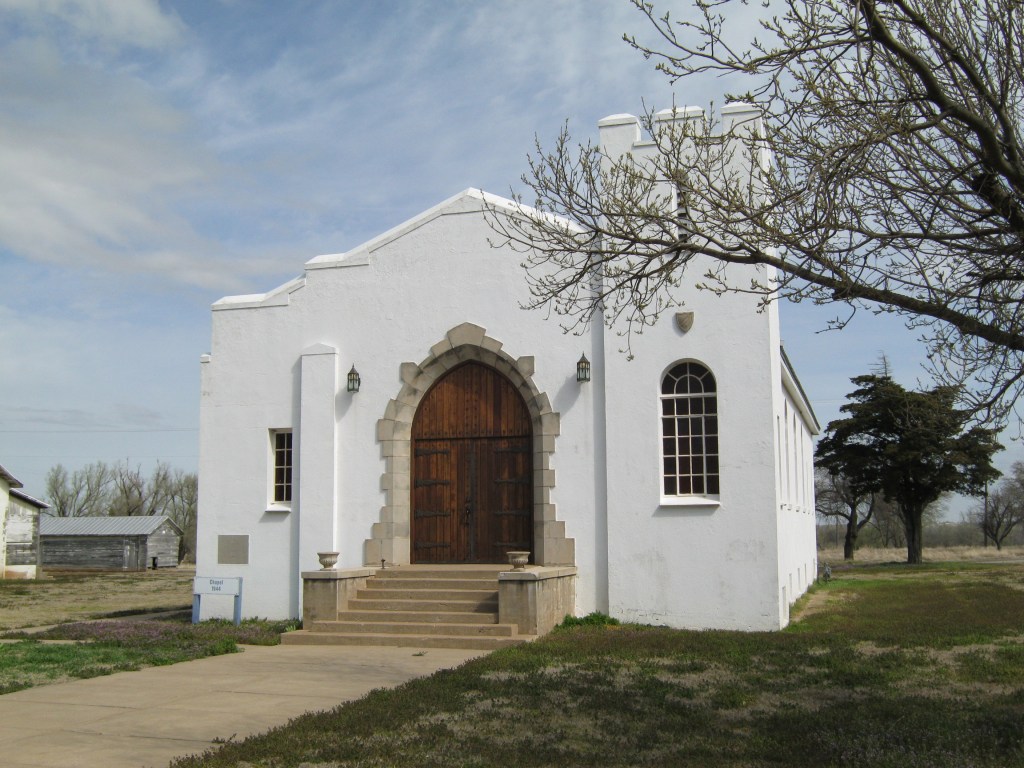
During World War II, Fort Reno became a prison camp for over 1,300 captured German and Italian soldiers of Rommel’s Afrika Corps. The soldiers were hired out to local farmers for work details. In 1944, the soldiers constructed the Post Chapel on the grounds.

Post Chapel built by German and Italian WW2 prisoners.

There is a prisoner cemetery located at the Fort. Sixty-two German and eight Italian soldiers who died at other prison camps in Texas and Oklahoma are buried there. Only one German prisoner who was kept there died at Fort Reno. Over the years after the war, families of those buried at Fort Reno have made visits to the cemetery to honor their loved ones.

The last military use of Fort Reno was in 1949 when the fort was turned back to the government. The land now is operated as a research facility by the US Department of Agriculture.

Early History of Fort Reno1

  1. Citation for Additional Infomation:
    Early History of Fort Reno
    http://www.fortreno.org/history-2/ ↩︎

Whales in Central Texas!

This is a story of a trip Mary and I made one summer to Bandera, Texas about 18 years ago. The central Texas town, about an hour northwest of San Antonio, is in the Texas Hill country of the Edward’s Plateau. The town calls itself the “Cowboy Capital of the World”. where the last cattle drives of the late 1800s staged their start. It also claims the “Cowboy Capital” because many of the rodeo circuit performers call the area around Bandera home.

One morning, we set out for a daylong exploration trip north of Bandera. Rather than stopping for a restaurant breakfast, we drove to a local doughnut shop not too far from the center of town. We decided to get egg and sausage sandwiches and coffee. The shop was located in a storefront of a strip mall along the west road out of town. Pulling into the shop’s parking lot, we arrived at the same time as a rather beat-up old sedan. Inside were an old man and a woman driver. His companion helped him get out of the car and to the entrance. The old man obviously needed the help when he got out of the car, holding her arm and hobbling along. I held the door for them, noticing his swollen feet. He had socks on but no shoes or sandals, his feet too misshapen to accommodate such coverings. His hair was gray and straggling and long, as was his beard. He hobbled over to a table by the door and sat, relieved that the journey from car to table was over.

After placing our order, we sat at a table near the couple. While our order was being prepped, the old man looked at me and then at my school ring and asked “Is that a Texas A&M ring?” I said no, it was from a college in New England. He nodded and told me that it looked like it was. We exchanged a few more pleasantries and I told him that I did attend Texas Tech University a long time ago. He sort of smiled and chuckled that only two good things came out of Tech: oil engineers and Buddy Holly.

“So, what did you study at Tech?” he asked.

“Museum Sciences with a specialty in biology. It was difficult to find a museum job after graduation, so I eventually became a high school biology teacher.”

“I was in biology, too” he responded, “but jobs were scarce for anyone without a doctorate. So I got into wildlife biology. I enjoyed working with mammals.”

With this, this old man’s stories got very interesting. He worked for a while in Georgia as a wildlife biologist. “It was being outside in the sun and the weather. Those years, I couldn’t sit still in an office.”

I don’t know how we got onto the subject, but he also thought that whales were very special. “There was a lot of whaling going in up there a long time ago” he offered, referring to the 19th-century New England whaling industry.

“Yup, Cape Cod and the Islands, eastern Massachusetts, also Rhode Island and along the Connecticut shore,” I agreed.

“What about New Hampshire?” he asked.

“No, not there, the coastline is only about 13 miles long,” added Mary.

“There was that famous whaling ship, the Charles Morgan”, he mentioned. “That’s in Connecticut, right? I visited that ship once. I was amazed at the ship. Its size and how it would hold all that whale oil and all those people.”

I told him I once had a student who volunteered at a small boat-building workshop and museum in Amesbury, Mass where he helped build a replica of one of the whaleboats that went after those creatures. It took over a year to complete the boat, but once it was finished, the builders sailed it along the coast from Amesbury, down past Boston, through the Cape Cod Canal, and on to Mystic Seaport in Connecticut so that it could added to the complement of the other whaleboats on the Charles Morgan.

“Those little boats were something. They weighed about a thousand pounds and had a crew of at least 6 men. They also carried a mile or more of rope. That rope was made of hemp. Really strong stuff, that hemp.” The old man’s eyes lit up when he talked about all he knew of whaling.

“What was the longest time a whaling ship was out looking for whales?” he asked me. When I told him three or so years ago, he corrected me. “Nope, eleven years! Can you imagine being away from home for that long a time? When you come back, your children are all grown.”

We talked for a bit more. I was so thrilled to hear this old-timer share his stories and memories. It goes to show that not all first impressions should be believed. That old man and I shared a love of biology and telling stories. For a short time, the time it takes to prep and eat a sandwich, it’s possible to share a friendship.

                                        7 February 2024

Forest Walk

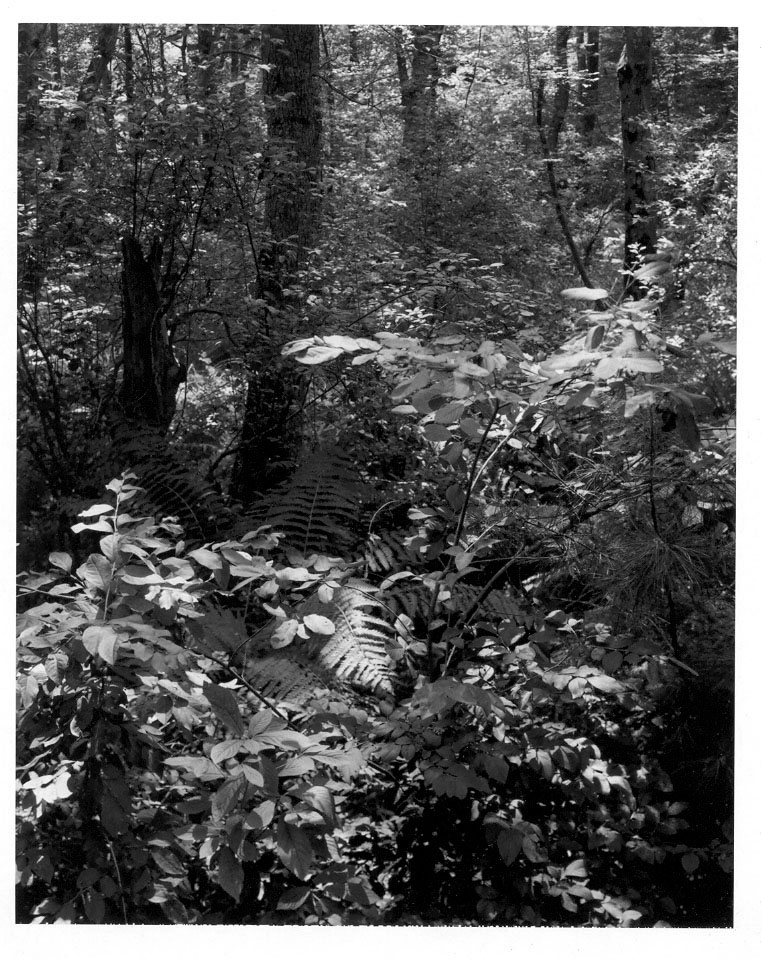
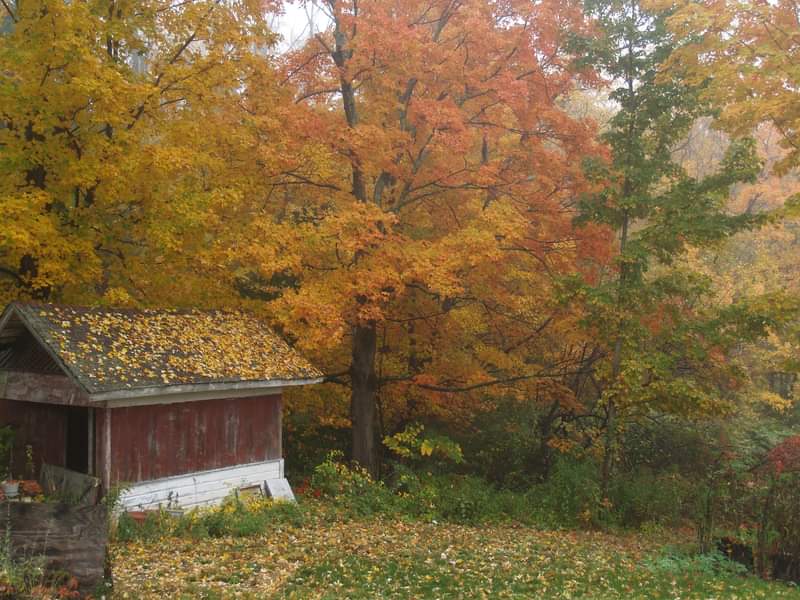
One of the activities that I enjoyed, while teaching Environmental Science with my high school freshmen classes, was the monthly trip out to the ‘environmental sites’. There were three locations where students set up testing equipment, took photos, and wrote narratives about their sites. Walking out to the sites, we had to cross over a wetland area using a wooden boardwalk. I always thought that the view along the boardwalk was peaceful and needed to be photographed to remind me to stop and take time to look at what nature produces along the way.

Fall Colors

The Changes in Forest Colors

Fall is an amazing season. The variety of the green shades of spring and summer, now blaze into yellows, oranges, and reds. What is the mechanism that provides us with such colors of the season?

At the risk of entering into the realm of physics and biology, it is necessary to understand something about how sunlight behaves when it reaches the grasses, shrubs, and trees around our homes.

To our senses, light appears invisible. We don’t really see it traveling through the air. Its presence is only detected when it strikes an object. The box is brown, the cup is red, and the sweater is blue. We ascribe those colors to the object, with sunlight (or lamp light) showing the colors there.

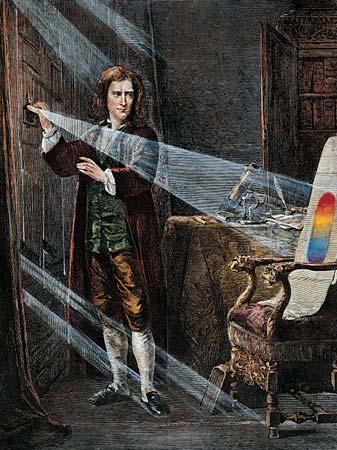
In reality, though, sunlight (and lamp light) is made up of all the colors we see in objects. Isaac Newton, the 17th-century scientist, was able to understand and explain how this is true. Puncturing a small hole in the shade of a darkened room and then allowing the ray of sunlight to pass through a glass prism, he was able to demonstrate that sunlight is composed of a range of colors: reds, oranges, yellow, green, blue, indigo, and violet, the “ROYGBIV” acronym we learned in school. Each color corresponds to a specific wavelength of energy. The red wavelengths are longer than the indigo and violet wavelengths.

So then, how is it we see colors? The object’s color is the result of chemicals on the object’s surface that absorb and reflect particular wavelengths of light. Here’s the tricky part, if an object is, let’s say red, the object is really absorbing not the red light wavelengths, but everything except red. The red wavelengths are reflected from the object and that red light is what makes it to our eyes. The object is ‘grabbing on to’ the blue, yellow, green, violet light wavelengths!

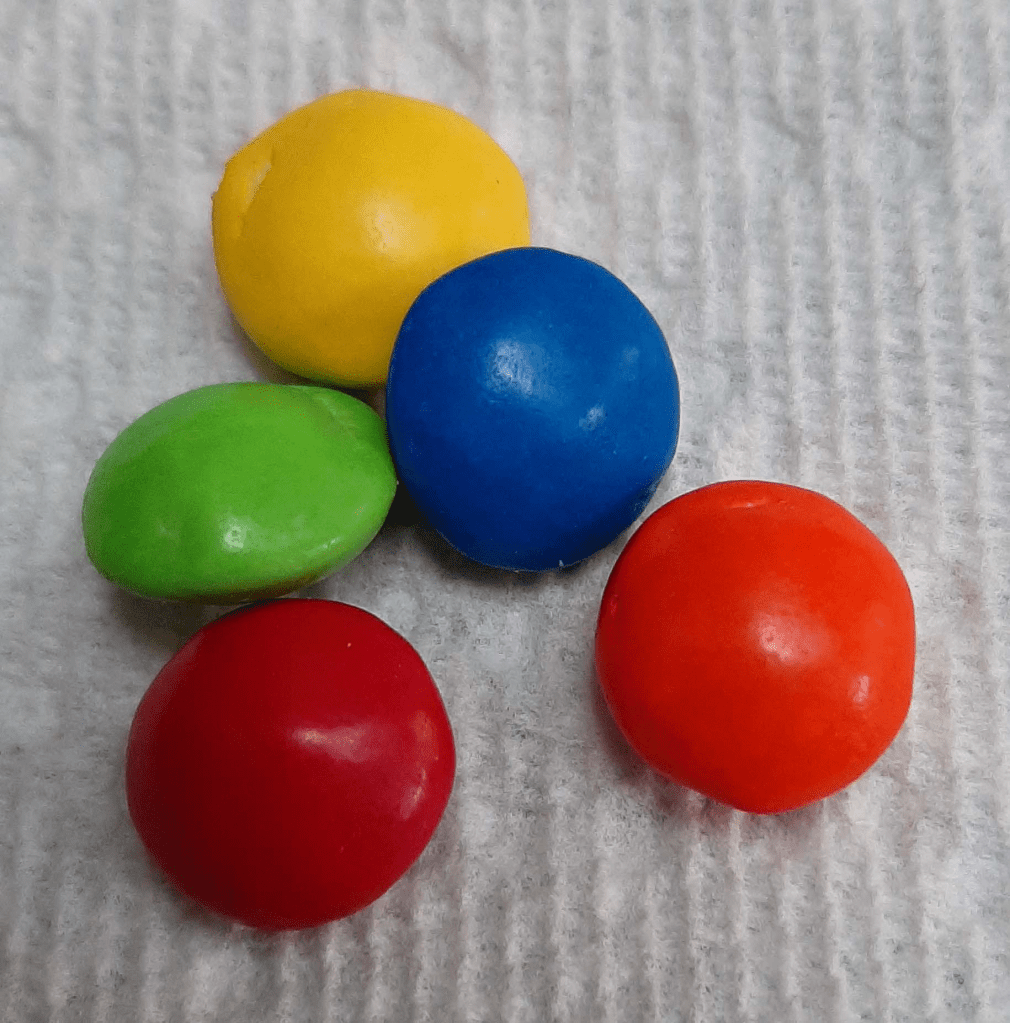
Take a look at the pieces of candy above. The colors of the outer cover are the result of light energy being absorbed and reflected by surface pigments. The yellow dye of the top candy piece absorbs reds, blues, and greens, but the yellow light is reflected off the candy. The same process is true for each of the other colors. The color of the candy is that wavelength being reflected back to our eyes.

Here’s a question to ponder: What happens to the various light wavelengths when an object is white, like the paper this is printed on?

OK, so, what does all this have to do with forest colors?

Remember I said something at the start of this essay about the various shades of green that we see in plants during the spring and summer? We know now, that the leaves and stems of the plants are absorbing the variety of wavelengths except green. The shades result from a mixing of the pigments in the plant structures that allow for a blending of color wavelengtare. The color wavelength energies that the plant absorbs is what the plant uses to perform photosynthesis, the combining of carbon dioxide (CO2) and water to produce sugars and oxygen. Green energy wavelengths are not absorbed, but reflected back into the environment. However, there must be pigments in the leaves that absorb those non-green wavelengths.

All spring and summer, plants combine water and CO,2 with solar energy making the tissues needed to produce leaves, stems, roots, flowers, and eventually, seeds as well as producing the energy needed to run all the process that keeps the plant alive.

What happens when the length of daylight lessens, the availability of water decreases, and the daytime temperatures decrease? These are the conditions the plants must face as the summer season ends and fall starts.

At this time of year here in New England, plants are in the process of ‘shutting down’ photosynthesis. They are getting ready for a time of hibernation. Any light available during the day becomes less available. Daily colder temperatures will slow chemical reactions. Soon any ground water near plant roots will freeze along with any water in tender leaves and stems. If these ice crystals grow large, they will damage soft tissues. The mechanism then in play is for the plants to pull water and sap down into their roots. Tender leaves will be allowed to wither and drop off from stems. This strategy also protects tree branches from accumulating heavy snow loads during winter. The snow loads could result in branches breaking from the tree trunk.

With photosynthesis slowing and then eventually stopping, the green pigment chlorophyll is destroyed. The other pigments, masked all summer long, now become apparent. The orange, yellow, and brown colors from the carotenoid pigments, found in corn, carrots, and bananas along with anthocyanin pigments that give color to apples, Concord grapes, blueberries, and plums give color to the forest trees.

The fallen forest leaves do provide a service to the forest ecosystem. The yearly leaf deposit allows for the forest floor to build up nutrients as the leaves decompose. The decomposed forest soil sits waiting for next year’s spring, ready to release the nutrients made in leaves from years past back to the trees.

Here Be Dragons!

By Steve Sousa
“King Philip Came Over For Good Spaghetti” is a mnemonic device I learned in my high school biology days. The initial letter in each word represents the name of the organizing level in the Linnaean system of classifying organisms: (K)ingdom, (P)hylum, (C)lass, (O)rder, (F)amily, (G)enus, and (S)pecies. Each step down from Kingdom becomes more specific in describing particular types of organisms, where all the members of that step share some similar characteristics. This month I’d like to focus on a particular Order of Insects, the Odonata whose members include damselflies and dragonflies. As a kid, these “bugs” scared me and my friends. Their huge eyes and long sideways wings gave them a prehistoric look and kid anecdotes report that they sewed up your lips or gave you painful bites. When encountered, they were given a wide radius!

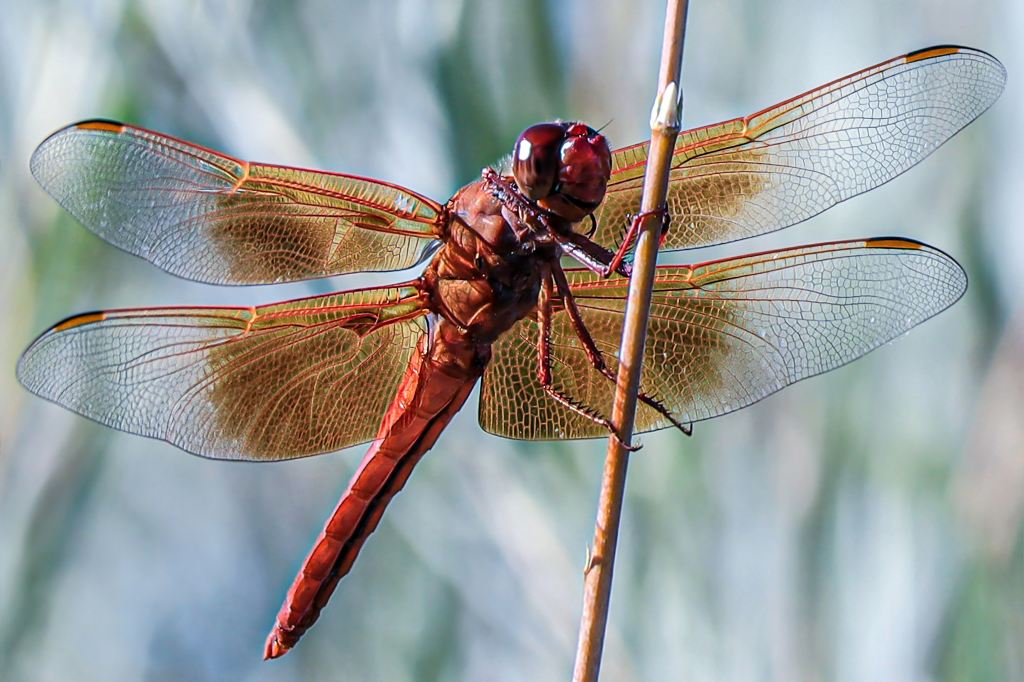
Photo by Dustin Humes on Unsplash

The Odonata order first appears in the fossil record during the late Carboniferous Period, a bit more than 300 million years ago, about 100 million years before the dinosaurs! It was during this time that the great coal deposits found in Europe and North America were put down. The environment during this time of Earth’s history was more humid and tropical, and had a somewhat uniform climate. Many of the plants and animals we recognize today had their origins during this period.

The damselflies and dragonflies we see today possess some structural similarities: they have two pairs of long, transparent wings that for the damselflies fold together above their body, while for dragonflies, their wings remain outstretched to the sides of their body, like airplane wings. The central thorax is large, roundish and is where the legs and wings attach. The abdomen is usually longer than the length of the wings. They are voracious predators of aquatic and terrestrial bugs and even small fish.

Dragonflies and damselflies begin life as eggs laid in or near water. The hatchlings, called nymphs, are aquatic, feeding on mosquito larvae and other small critters sharing the pond with them. After a period of weeks to several years, depending upon the species, the nymph will crawl onto a plant stalk to molt from their ‘skin’ into the flying adult stage.

The adults are extraordinary fliers. The large eyes provide them with excellent vision and the two pair of wings give them acrobatic maneuverability in flight. They are able to catch other flying insects on the wing. They are a great consumer of mosquitoes. It is a good idea to protect streams and ponds near your property to encourage them to hunt in your backyard!

There are nine Families of odonates that can be found here in New Hampshire, three families of damselflies and six families of dragonflies. For the damselflies, there are the Broad-winged Damsels (family Calopterygidae), the Spreadwings (family Lestidae), and the Pond Damsels (family Coenagrionidae). The six families of dragonflies are the Darners (family Aeshnidae), the Clubtails (family Gomphidae), the Spiketails (family Cordulegastridae), the Cruisers (family Macromiidae), the Emeralds (family Cordulidae), and the Skimmers (family Libellulidae).

Age and knowledge have tempered the uneasiness I used to feel about these critters. They perform a variety of important ‘ecosystem services’ (activities that make a positive contribution to nature and ourselves). For example, they feed on bugs that feed on me. Doing so, they reduce the number of mosquitoes in an area. This means less need for pesticides. One action you could do to help these marvelous creatures: when visiting streams and ponds, don’t pile up stones together; the undersides of the stones provide places to lay eggs. Placing the stones out of the water disturbs their lifecycles!

During the summer in my backyard, I’ve seen them congregate in large numbers. They are going after small flying insects coming out of the ground from their seasonal lifecycle. There are so many dragons that my yard looks like a miniature airport, the mini dragons zipping back and forth, changing direction instantaneously as they hunt their prey.

I now take joy in having these ‘dragons’ visit my yard. I love pointing out their behaviors to our grandchildren, hoping that they will not fear having their mouths sewn shut and find amazement in seeing a group of critters whose origins are so long ago in the past.

This article originally appeared in the August edition of “What’s Happening?” the newsletter of the Kingston (NH) Historical Museum.

The Curator’s Desk

This is my first blog. I’ve wanted to share my thoughts and observations about the world and our place in it for some time. There is much to learn and discover about our world and being a teacher for a long time, I want to share what I’ve found. If you find these words to help you understand your place in the world, let me know. I’d love to share a discussion.